

c
July 11, 2026 — If you've walked through a downtown plaza, a new shopping promenade, or a freshly renovated park lately, you've probably noticed something: wood benches are disappearing. In their place, sleek powder-coated steel benches are popping up in cities from Austin to Ann Arbor.
The shift isn't random. Municipal planners and commercial property managers across the United States are increasingly choosing outdoor metal benches over traditional wood alternatives — and the reasons go well beyond looks.
A quiet trend with loud implications
Talk to anyone who manages outdoor public seating for a living, and they'll tell you the same thing: wood rots, splinters, needs resealing, and gets tagged with graffiti that won't come off. A heavy duty steel outdoor bench solves most of those problems in one purchase. It doesn't warp in Phoenix heat. It doesn't crack after a Chicago winter. And the powder-coated finish means a pressure washer takes care of most vandalism in under thirty seconds.
It's not that wood is bad. A well-maintained teak bench in a private garden still has its place. But when you're buying seating for a public street or a commercial courtyard — where the bench is going to get pounded by weather, traffic, and the occasional skateboard — metal just makes more sense. Cities are catching on fast.
What's driving demand in 2026
Several factors are pushing commercial metal benches into the spotlight this year:
First, there's the maintenance math. A typical park department in a mid-sized city maintains anywhere from 150 to 400 benches. Every wooden bench requires sanding, staining, and sealing every two to three years. Multiply that by 300 benches, and you're looking at a full-time crew just keeping seats usable. A powder coated steel bench cuts that maintenance schedule to essentially zero — wipe it down, hose it off, done.
Second, the supply chain has shifted. Domestic and overseas manufacturers have invested heavily in automated metal fabrication over the past five years. The result: you can now get a commercial grade outdoor metal bench at a price point that's competitive with mid-range wood, especially when you factor in the total cost of ownership over ten years.
Third — and this is the one nobody talks about — it's theft. Wood benches get dismantled for the lumber. It sounds absurd, but ask any parks director. A 150-pound welded steel frame bolted into concrete is a lot harder to walk away with than a few dozen board feet of cedar.
The features that matter when buying in bulk
Not all outdoor metal benches are built the same. If you're sourcing for a municipal project or a commercial development, here are the specs that separate a bench that lasts from one that ends up rusted in a storage shed:
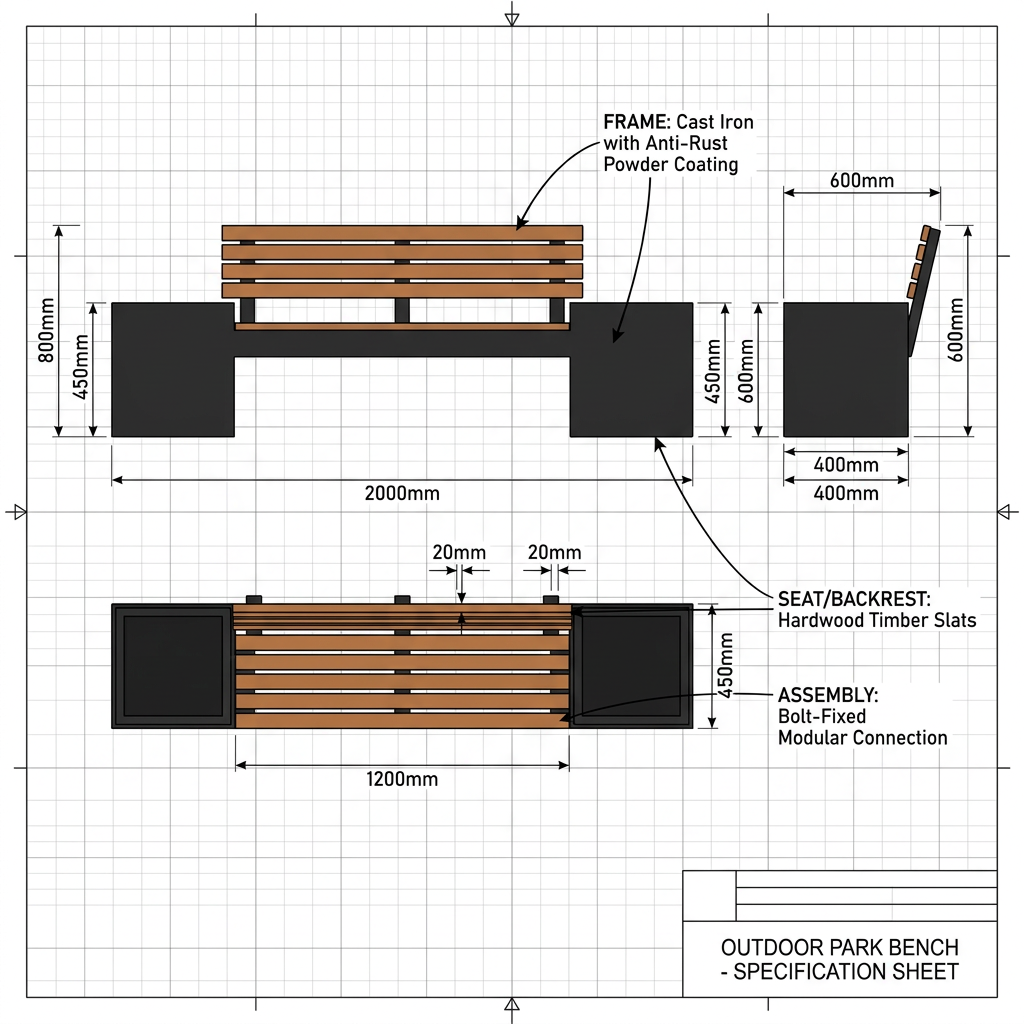
Frame material and gauge. Look for benches built from tubular or flat-bar steel with a minimum wall thickness of 1.5 mm. Anything thinner and you'll see warping within the first two summers. Galvanized steel adds another layer of corrosion protection underneath the powder coat, which matters if you're installing anywhere within fifty miles of a coastline.
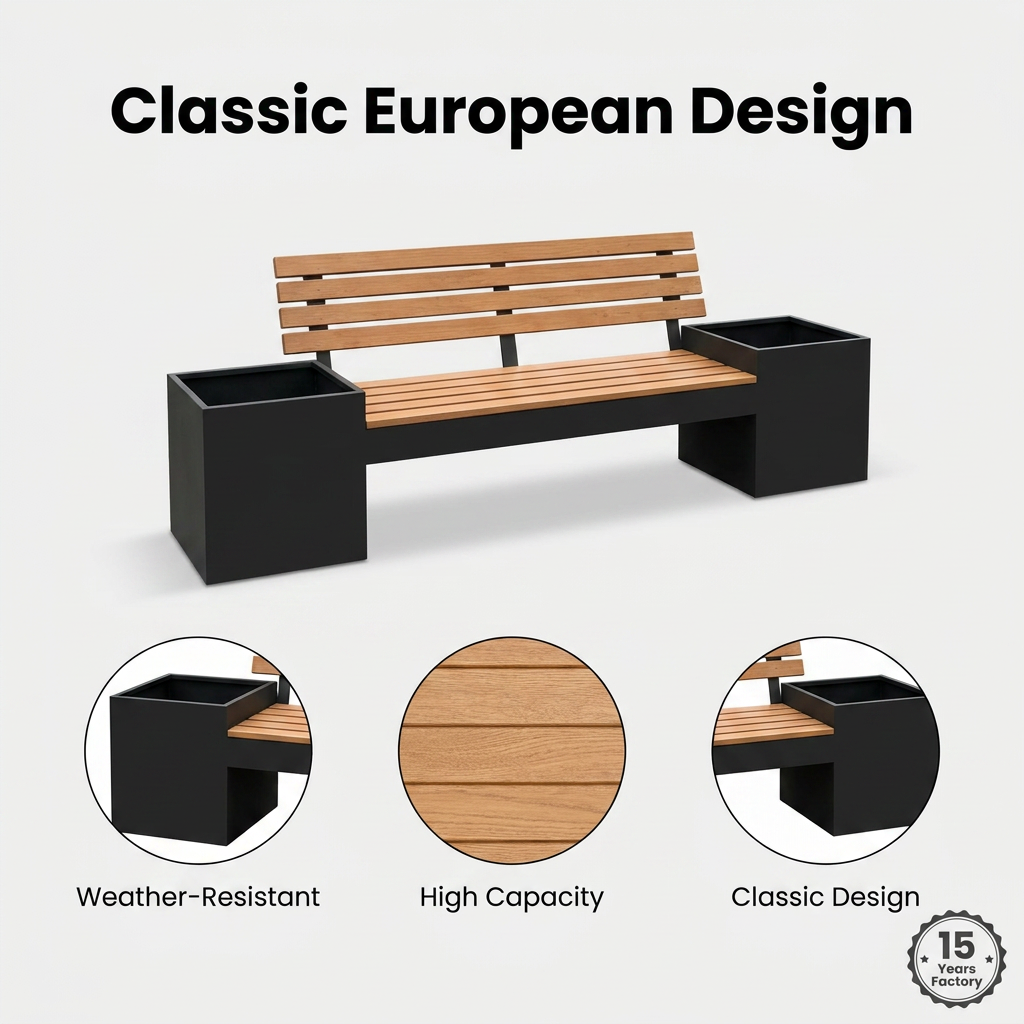
Powder coating quality. A lot of manufacturers will say "powder coated" without specifying the process. What you want is electrostatic powder coating baked at 180 to 200 degrees Celsius. That gives you a finish that resists UV fading and doesn't chip when someone drops a metal water bottle on it. Good shops will offer RAL color matching, too — black and dark bronze are the safe bets, but some architects are ordering custom greens and grays to blend with landscaping.
Installation type. There are basically two options: freestanding and surface-mounted. Freestanding is fine for patios and private gardens. For anything public, you want pre-drilled anchor holes so the bench can be bolted into concrete footings. Most manufacturers include the mounting hardware, but double-check — it's a small thing that causes big headaches on installation day.
Seat design. Slatted seats drain rainwater, which seems obvious until you sit on a flat-panel bench after a storm and end up with a puddle in your lap. Curved backrests with a slight recline make a real difference for anyone sitting longer than five minutes. And armrests aren't just decorative — they're an accessibility feature that older visitors and people with mobility issues rely on to sit down and stand up safely.
Who's buying — and why it's not just cities anymore
The market for commercial outdoor benches used to be dominated by government RFPs. That's changing. Shopping center developers are ordering metal benches by the dozen for outdoor dining areas. Hotel chains are replacing poolside furniture with steel-frame seating that doesn't blow away in coastal wind. Apartment complexes are installing garden metal benches in common areas as part of amenity upgrades to justify higher rents.
Even homeowners are getting in on it. A heavy duty metal bench with a clean, modern silhouette works just as well on a backyard patio as it does in a public plaza — and the average homeowner has exactly zero interest in refinishing a bench every spring.
What to ask a supplier before placing an order
If you're sourcing outdoor metal park benches — whether you're buying ten units or a thousand — a few pointed questions will tell you most of what you need to know:
- What's the steel gauge and is the frame galvanized underneath the powder coat?
- Can you provide a salt spray test report for the coating?
- What's the weight capacity per seat?
- Do the benches ship fully assembled or partially assembled?
- What's your typical lead time for a 100-unit order?
- Can you match a specific RAL color code?
A supplier who can answer all six questions without hesitation has probably done this before. Anyone who stalls on the salt spray test is worth avoiding.
The bottom line
Outdoor public seating isn't the most glamorous topic in urban design. Nobody takes Instagram photos of a bench. But walk through any thriving public space — a busy town square, a university campus between classes, a boardwalk at sunset — and you'll notice that every single seat is taken. People gravitate toward places where they can stop and stay awhile. The bench underneath them matters more than anyone realizes.
If you're sourcing outdoor metal benches or commercial steel seating for an upcoming project, the market in mid-2026 is competitive, the manufacturing quality is higher than it's ever been, and the total cost of ownership compared to wood is hard to argue against. Just do your homework on the steel gauge, the coating process, and the supplier's track record — and you'll end up with benches that outlast the pavement they're bolted to.
This article was contributed by an outdoor furniture manufacturer with 15+ years of experience producing commercial-grade steel benches, park seating, and street furniture for municipal and private-sector clients worldwide.